

Sensory Play for Autistic Children: A Practical Guide for Parents
Sensory play includes activities that engage a child’s senses through touch, movement, sight, sound, and sometimes smell. For autistic children, sensory play can be especially meaningful because sensory processing differences are common and can affect regulation, attention, participation, and daily routines.
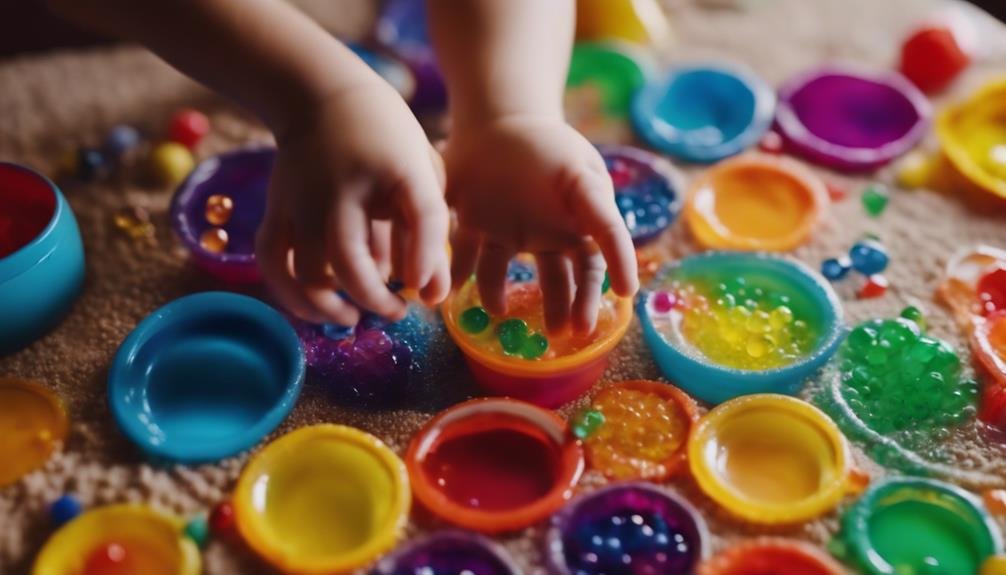
Sensory play
Children on the autism spectrum may show different sensory patterns. Some may seek more input through movement, touch, pressure, or sound, while others may avoid certain sensations because they feel overwhelming. These sensory differences can influence emotional responses, behavior, social engagement, and everyday functioning.
Sensory play offers a simple and child-friendly way to support participation. It is not just about “keeping a child busy.” When used thoughtfully, sensory play can help children explore safely, regulate their bodies, sustain attention, and build motor and play skills. Occupational therapy literature also describes sensory integration intervention as a play-based approach used to support functional goals in some children with autism.
What is sensory play?
Sensory play refers to activities that stimulate one or more senses using materials and experiences such as water, sand, textured objects, movement games, music, visual materials, or deep-pressure play. These activities can be adapted for children between 2 and 12 years based on their sensory profile, developmental level, and interests. This is a practical clinical framing, and it aligns with the broader research showing that children with autism often have distinct sensory processing patterns that affect function.
How sensory play can help children with autism
1. Sensory regulation: Sensory play can help children who are over-responsive or under-responsive to sensory input. A child who seeks movement may benefit from jumping, crashing, or swinging, while a child who is sensitive to touch may do better with gradual exposure to preferred textures first. Sensory processing patterns are strongly linked with function and behavior in autistic children.
2. Attention and focus: When a child’s sensory system is better regulated, it may become easier for them to stay engaged in structured play or guided activity. Some occupational therapy studies have reported improved task engagement following sensory integration-based intervention in young children with autism.
3. Fine motor skills: Scooping, pouring, squeezing, stirring, pinching, grasping, and pressing materials during sensory play can strengthen the hands and improve coordination. These activities also create opportunities for bilateral hand use and motor planning within a motivating play context. Research reviews in occupational therapy include developmental skill-based and sensory-based approaches as relevant areas of intervention for children with autism.
4. Emotional regulation: Sensory play can provide calming or alerting input depending on the activity. Slow, repetitive, predictable input may help some children feel calmer, while movement-based activities may help others feel more alert and organised. Sensory patterns in autism have been associated with emotional and behavioural difficulties, which makes regulation-focused support especially important.
5. Exploration and learning: Sensory play encourages curiosity, problem-solving, and independent exploration. Children learn by touching, moving, watching, comparing, and experimenting. For many children, this kind of learning feels safer and more natural than adult-directed instruction. Occupational therapy literature supports participation-focused, play-based approaches when they connect meaningfully to the child’s functional goals.
6. Social interaction: Sensory play can also support shared attention, turn-taking, imitation, and co-regulation when an adult or peer joins in. Activities such as water play, messy play, movement games, or sensory bins can become opportunities for connection, communication, and shared enjoyment. Occupational therapy reviews for autism include relationship-based and interactive interventions as important practice areas.
Tips for parents to make sensory play more helpful
Observe your child’s sensory preferences: Notice whether your child tends to seek or avoid touch, sound, movement, or visual stimulation. Understanding this helps you choose activities that are supportive rather than stressful. Sensory processing patterns vary widely across autistic children.
Start with preferred textures: Begin with materials your child already enjoys, then slowly introduce less preferred textures over time. This helps build trust and tolerance without overwhelming the child. Research supports the importance of individual sensory patterns rather than assuming the same strategy works for every child.
Keep sessions short and structured: Short, predictable sensory play sessions often work better than long, open-ended ones. A simple beginning, middle, and end can help children know what to expect and stay regulated.
Use simple instructions and modelling: Show the activity rather than giving too many verbal directions. Children often respond better when adults demonstrate first and join in calmly. This is a clinical best-practice inference consistent with play-based OT approaches described in the literature.
Include movement breaks: Movement breaks such as jumping, swinging, crashing into cushions, crawling, or deep-pressure activities can help some children regulate before or during seated play. Sensory integration literature commonly includes vestibular and proprioceptive experiences as part of intervention.
Create a safe, clutter-free environment: Too much visual or auditory stimulation can make sensory play harder for some children. A simple, safe space often supports better participation. This is a practical environmental adaptation that fits the occupational therapy focus on matching task demands to the child’s needs.
Gradually build tolerance: Introduce new sensory experiences slowly and respectfully. The goal is not to force participation, but to build comfort, confidence, and flexibility over time.
Follow your child’s comfort and interest: The child’s cues matter. Sensory play works best when it is enjoyable, meaningful, and adjusted to the child’s regulation state. Forced participation may increase distress rather than support learning. This is a clinical inference supported by the literature’s emphasis on individualized intervention and functional participation.
Final thoughts: Sensory play can be a valuable part of supporting children with autism when it is individualized, playful, and responsive to the child’s sensory profile. It may help with regulation, attention, motor skills, emotional balance, exploration, and social participation. At the same time, sensory play should not be a one-size-fits-all activity. What calms one child may overwhelm another. The most helpful sensory play happens when adults observe carefully, adapt thoughtfully, and prioritize the child’s comfort and engagement.
APA references
Ayres, A. J. (1972). Sensory integration and learning disorders. Western Psychological Services.
Baker, A. E. Z., Lane, A., Angley, M. T., & Young, R. L. (2008). The relationship between sensory processing patterns and behavioural responsiveness in autistic disorder: A pilot study. Journal of Autism and Developmental Disorders, 38(5), 867–875. https://doi.org/10.1007/s10803-007-0459-0
Baranek, G. T. (2002). Efficacy of sensory and motor interventions for children with autism. Journal of Autism and Developmental Disorders, 32(5), 397–422. https://doi.org/10.1023/A:1020541906063
Case-Smith, J., & Arbesman, M. (2008). Evidence-based review of interventions for autism used in or of relevance to occupational therapy. American Journal of Occupational Therapy, 62(4), 416–429. https://doi.org/10.5014/ajot.62.4.416
Case-Smith, J., Weaver, L. L., & Fristad, M. A. (2015). A systematic review of sensory processing interventions for children with autism spectrum disorders. Autism, 19(2), 133–148. https://doi.org/10.1177/1362361313517762
Little, L. M., Dean, E., Tomchek, S., & Dunn, W. (2018). Sensory processing patterns in autism, attention deficit hyperactivity disorder, and typical development. Physical & Occupational Therapy in Pediatrics, 38(3), 243–254. https://doi.org/10.1080/01942638.2017.1390809
Pfeiffer, B. A., Koenig, K., Kinnealey, M., Sheppard, M., & Henderson, L. (2011). Effectiveness of sensory integration interventions in children with autism spectrum disorders: A pilot study. American Journal of Occupational Therapy, 65(1), 76–85. https://doi.org/10.5014/ajot.2011.09205
Randell, E., McNamara, R., Delport, S., Busse, M., Hastings, R. P., Gillespie, D., Hall, C. L., et al. (2022). Sensory integration therapy for children with autism and sensory processing difficulties: The SenITA randomized controlled trial. Health Technology Assessment, 26(29). https://doi.org/10.3310/hta26290
Schaaf, R. C., Dumont, R., Arbesman, M., & May-Benson, T. A. (2018). Efficacy of occupational therapy using Ayres Sensory Integration®: A systematic review. American Journal of Occupational Therapy, 72(1), 7201190010p1–7201190010p10. https://doi.org/10.5014/ajot.2018.028431
Suarez, M. A. (2012). Sensory processing in children with autism spectrum disorders and impact on functioning. Pediatric Clinics of North America, 59(1), 203–214. https://doi.org/10.1016/j.pcl.2011.10.012
Tomchek, S. D., & Dunn, W. (2007). Sensory processing in children with and without autism: A comparative study using the Short Sensory Profile. American Journal of Occupational Therapy, 61(2), 190–200. https://doi.org/10.5014/ajot.61.2.190
Watling, R. L., & Dietz, J. (2007). Immediate effect of Ayres’s sensory integration-based occupational therapy intervention on children with autism spectrum disorders. American Journal of Occupational Therapy, 61(5), 574–583. https://doi.org/10.5014/ajot.61.5.574
By,
Dr. Prabitha. D., BOT
Occupational Therapist
DCCD
Chitra Thadathil., MSc (Sp & Hg) | PGCert SI
Sr. Speech Pathologist
Founder & Director
DCCD