

Understanding Down Syndrome: Beyond the Diagnosis
When a child is born with Down syndrome, families are often introduced to the diagnosis through medical terms, possible complications, and uncertainty. But Down syndrome is not a tragedy. It is a genetic variation caused by an extra copy of chromosome 21, and it does not define a child’s worth, potential, or place in the world.
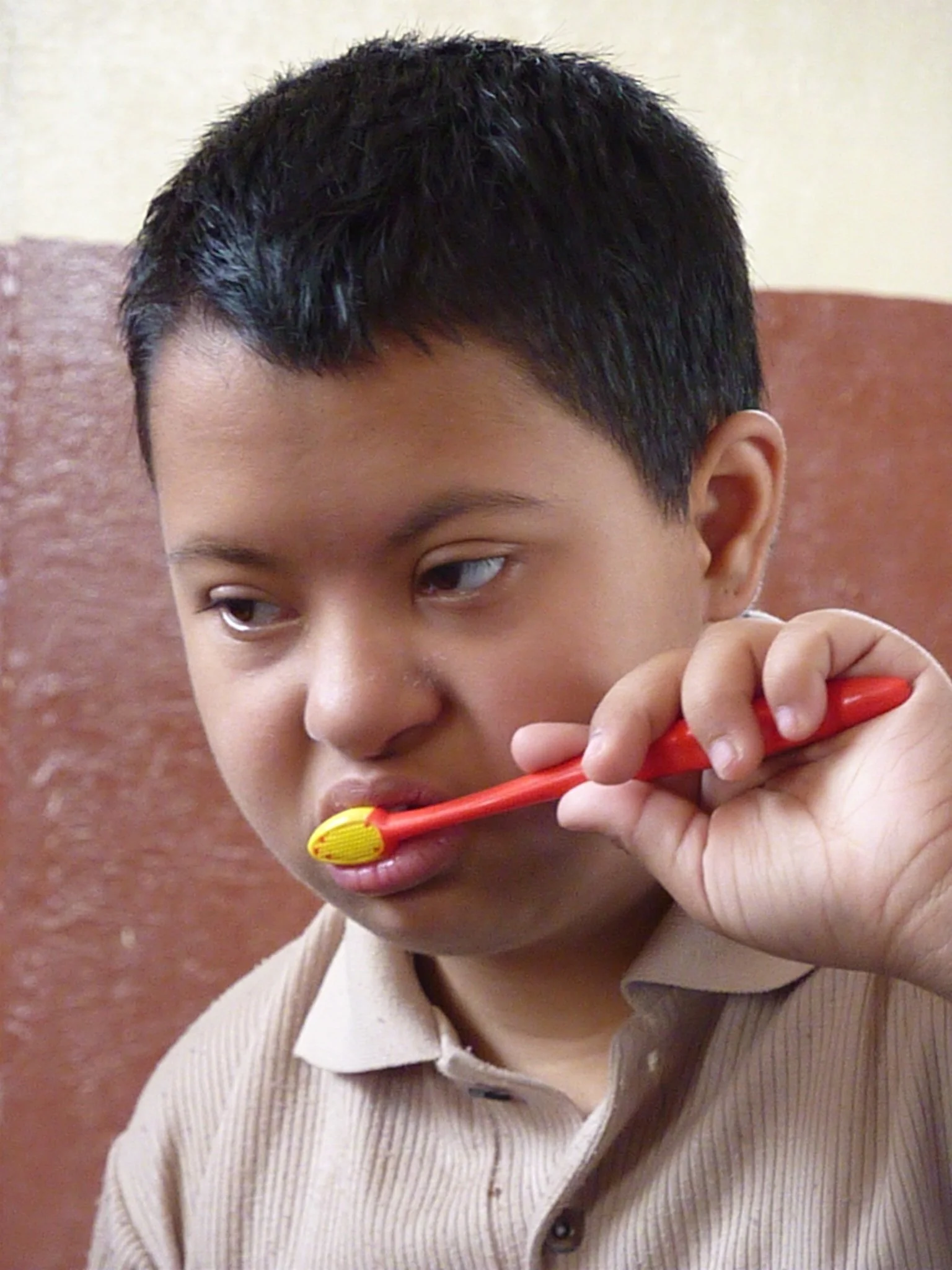
Children with Down syndrome are first and foremost children—with personalities, emotions, strengths, preferences, and the ability to learn, grow, connect, and thrive. They may experience developmental differences, low muscle tone, or health-related challenges, but with the right medical care, early intervention, therapy, education, and family support, they can make meaningful progress and lead fulfilling lives.
At the heart of support is not pity, but belief. When we move beyond labels and focus on the child as a whole person, we begin to create opportunities instead of limitations. Early intervention, inclusive environments, communication support, and respectful expectations can make a powerful difference in helping each child build independence, confidence, and participation in everyday life.
Most importantly, every child with Down syndrome deserves to be seen not through the lens of “normalcy,” but through the lens of dignity, possibility, and belonging. They are not defined by a diagnosis. They are valued individuals who deserve understanding, inclusion, and every opportunity to flourish.
This is not simply an explanation of a genetic condition. It is an invitation to think differently — to replace pity with respect, fear with understanding, and awareness with acceptance.
What Is Down Syndrome?
To understand Down syndrome, it helps to begin with the body’s genetic blueprint. Every person has DNA inside their cells. This DNA is organized into structures called chromosomes. Usually, a person has 46 chromosomes, arranged in 23 pairs, with one set inherited from each parent.
Down syndrome happens when there is an extra copy of chromosome 21. Instead of having two copies, a person has three. That is why the medical name is Trisomy 21. This extra chromosome is present from conception and changes the way the body and brain develop (National Institute of Child Health and Human Development [NICHD], 2026).
There are three main forms of Down syndrome:
Trisomy 21 is the most common form. In this type, every cell in the body has an extra copy of chromosome 21.
Mosaic Down syndrome is less common. In this form, only some cells have the extra chromosome, while others have the usual number.
Translocation Down syndrome happens when part of chromosome 21 attaches to another chromosome. This is the only form that can sometimes be inherited through a parent who carries a chromosomal translocation, although most cases still happen by chance (NICHD, 2026).
It is important for parents to know this clearly: Down syndrome is not caused by something they did or did not do during pregnancy. It is not a disease to be “cured.” It is a genetic condition that happens naturally and unpredictably. Although the chance increases with maternal age, babies with Down syndrome are born to mothers of all ages, and many are born to women younger than 35 because more babies overall are born in that age group (Centers for Disease Control and Prevention [CDC], 2026).
A History We Must Remember
The history of Down syndrome includes both pain and progress.
For many decades, children with Down syndrome were not seen as capable. Families were often told to place their children in institutions, away from home, education, and community life. These children were denied opportunities not because they lacked value, but because society failed to see it.
The turning point came when families began to challenge those beliefs. Parents, advocates, and self-advocates pushed for better healthcare, access to education, and inclusion in everyday life. Over time, the public began to understand what families had known all along: children with Down syndrome can learn, communicate, build relationships, and participate meaningfully in society.
Today, many children with Down syndrome attend school, receive therapy, learn functional and academic skills, take part in sports and the arts, and grow into adults with jobs, friendships, and fuller lives. This progress did not happen because the condition changed. It happened because expectations changed, support improved, and barriers began to come down (National Down Syndrome Society [NDSS], 2021).
That is an important truth: often, the greatest disability is not in the person, but in the environment around them.
Every Child Is an Individual
One of the biggest misconceptions about Down syndrome is that everyone with the condition is the same. They are not.
A child with Down syndrome will usually look more like their own family than like another child with Down syndrome. They may have their mother’s eyes, their father’s smile, or a sibling’s personality. Like all children, they are unique.
There are some physical traits that are commonly seen. These may include low muscle tone, shorter stature, a flatter nasal bridge, almond-shaped eyes, or a single crease across the palm. Some children may also have sensory processing differences, which can affect how they respond to sound, light, touch, or movement (NICHD, 2023).
Developmentally, many children with Down syndrome learn at a slower pace. Most have mild to moderate intellectual disability, but this does not mean they cannot learn. It simply means they may need more time, repetition, support, and the right teaching approach (MedlinePlus Genetics, 2020).
One very important point for parents and professionals is this: many children with Down syndrome understand much more than they are able to express. Speech may be harder because of low muscle tone, motor planning challenges, hearing differences, sensory processing or oral-motor difficulties. This can create a gap between what a child knows and what they can say. Because of this, adults must be careful never to assume low understanding just because spoken language is limited.
Communication can happen in many ways — through speech, gestures, sign language, pictures, or assistive technology. When children are given supportive ways to communicate, their abilities often become much more visible.
It is also important to challenge the stereotype that people with Down syndrome are “always happy.” This may sound harmless, but it reduces a whole person to a one-dimensional image. Children and adults with Down syndrome experience the full range of emotions — joy, frustration, sadness, excitement, fear, love, and disappointment — just like everyone else. They are not perpetual children. They are human beings with individual personalities, interests, and emotions (NDSS, n.d.).
Health, Development, and Early Support
A diagnosis of Down syndrome can also come with certain medical and developmental concerns. Some babies are born with associated health conditions, while others are relatively healthy. Each child is different.
Common areas that may need monitoring include:
congenital heart conditions
hearing and vision difficulties
thyroid concerns
low muscle tone
feeding challenges
increased vulnerability to respiratory infections (NICHD, 2023; Bull, 2022)
For example, around half of infants with Down syndrome are born with a congenital heart defect, which is why early medical follow-up is so important (CDC, 2024). The good news is that pediatric healthcare has improved greatly, and many medical issues can now be treated or managed successfully.
One of the most powerful supports for a child with Down syndrome is early intervention.
Early intervention may include physical therapy, occupational therapy, speech-language therapy, feeding support, developmental therapy, and family coaching. These services help build the child’s foundations for movement, communication, regulation, play, learning, and independence. They do not “fix” the child. They support development and help the child participate more fully in daily life.
Physical therapy can help with posture, balance, strength, and motor milestones such as sitting, crawling, and walking. Occupational therapy can help with fine motor development, sensory processing, self-help skills, and participation in daily routines. Speech-language therapy can support communication, feeding, oral-motor development, and language understanding and expression.
With the right support, children with Down syndrome can make meaningful progress over time.
Life expectancy has also changed dramatically. In 1960, the average life expectancy for a person with Down syndrome in the United States was about 10 years. By 2007, it had increased to about 47 years, and more recent NIH and advocacy sources note that many people now live into their 60s (CDC, 2024; NIH, 2025). This change reflects better healthcare, better support, and greater inclusion.
Education, Work, and Community Life
Children with Down syndrome benefit greatly from inclusion. In schools, inclusive education gives children opportunities to learn alongside peers, develop social understanding, and participate in the ordinary rhythms of classroom life. With the right supports, many students with Down syndrome learn literacy, numeracy, communication, self-help, and vocational skills (NDSS, 2021).
Inclusion also benefits other children. It teaches empathy, patience, flexibility, and respect for human differences.
As children grow into adults, the conversation must not stop at school. Adults with Down syndrome deserve opportunities for meaningful work, relationships, recreation, and community participation. Many work in hospitality, education support, office settings, retail, advocacy, arts, and family businesses. Others pursue supported employment, vocational training, or post-secondary programs.
Independence may look different for different people. For some, it may mean living with light support. For others, it may mean strong family involvement across adulthood. The goal is not to force a narrow picture of independence, but to support dignity, choice, belonging, and participation.
A Call to Acceptance
When we talk about Down syndrome, language matters. Words shape expectations. Expectations shape opportunities.
If we speak only in terms of deficits, families begin their journey with fear. If we speak with dignity, honesty, and hope, we make room for possibility.
Acceptance means assuming competence. It means providing support without pity. It means making schools, workplaces, churches, public spaces, and communities more welcoming and accessible. It means seeing the child before the diagnosis and the person before the label.
And when society makes room for people with Down syndrome, everyone benefits. We become more patient, more inclusive, more humane, and more aware of what truly gives a person value.
So when you meet a child or adult with Down syndrome, do not respond with sorrow. Respond with respect. Do not focus only on the chromosome. Focus on the person. Because every child deserves to be seen not as a problem to solve, but as a life to be welcomed.
References
Bull, M. J. (2022). Health supervision for children and adolescents with Down syndrome. Pediatrics, 149(5), e2022057010. https://doi.org/10.1542/peds.2022-057010
Centers for Disease Control and Prevention. (2024, November 22). Living with Down syndrome. https://www.cdc.gov/birth-defects/living-with-down-syndrome/index.html
Centers for Disease Control and Prevention. (2026, January 8). Down syndrome. https://www.cdc.gov/birth-defects/about/down-syndrome.html
MedlinePlus Genetics. (2020, June 1). Down syndrome. U.S. National Library of Medicine. https://medlineplus.gov/genetics/condition/down-syndrome/
National Down Syndrome Society. (2021, December). Down syndrome: Guidelines for inclusive education. https://ndss.org/Guidelines_for_Inclusive_Education.pdf
National Down Syndrome Society. (n.d.). Facts, myths, & truths about Down syndrome. https://ndss.org/myths-truths
National Institute of Child Health and Human Development. (2023, November 30). What conditions or disorders are commonly associated with Down syndrome? https://www.nichd.nih.gov/health/topics/down/conditioninfo/associated
National Institute of Child Health and Human Development. (2024, February 16). What are common treatments for Down syndrome? https://www.nichd.nih.gov/health/topics/down/conditioninfo/treatments
National Institute of Child Health and Human Development. (2026, January 8). What causes Down syndrome? https://www.nichd.nih.gov/health/topics/down/conditioninfo/causes
National Institutes of Health. (2025, July 16). About Down syndrome. https://www.nih.gov/include-project/about-down-syndrome
By,
Govinda Rasu (BOT)
Occupational Therapist (DCCD)
Chitra Thadathil (MSc (Sp & Hg) | PG Cert SI
Speech Pathologist & SI Practitioner
Founder & Director (DCCD)